Accurate measurements are the difference between a custom blind that looks built-in and one that leaves gaps of light or scrapes the frame. The good news is that measuring is straightforward once you know whether you want an inside or outside mount and which numbers to record.
This guide walks you through both methods. If you would rather not measure yourself, we measure every window for free during an in-home consultation.
Key takeaways
- Decide on an inside or outside mount before you measure.
- Use a steel tape measure and record every measurement to the nearest 1/8 inch (or millimetre).
- For inside mounts, measure width in three places and use the narrowest, and height in three places and use the longest.
- Do not make your own deductions. Give exact measurements and let the manufacturer size the blind.
Inside mount or outside mount?
| Inside mount | Outside mount | |
|---|---|---|
| Where it goes | Inside the window frame | On the wall or trim above the window |
| Look | Clean, built-in | Makes the window look larger |
| Light control | Small light gaps at the edges | Overlaps the frame for better darkness |
| Needs | Enough frame depth for the headrail | Flat wall or trim space above and beside the window |
Inside mounts suit most windows with a deep enough frame. Outside mounts are the better choice for shallow frames, windows with handles or cranks that stick out, and bedrooms where you want as little light leakage as possible.
What you need
- A steel tape measure (fabric tapes stretch)
- A pencil and a sheet to record each window
- A step stool for tall windows
How to measure for an inside mount
- Width: measure the inside of the frame from side to side at the top, middle and bottom. Record the narrowest of the three.
- Height: measure from the top inside of the frame to the sill on the left, centre and right. Record the longest of the three.
- Depth: measure how deep the frame is, from the glass or any obstruction to the front edge. This confirms the headrail or cassette will fit.
- Check for obstacles: note handles, locks, alarm sensors or cranks that could get in the way.
How to measure for an outside mount
- Width: measure the area you want to cover, then add at least 5 cm (2 in) on each side so the blind overlaps the opening.
- Height: measure from where the headrail will sit, usually 5 to 8 cm (2 to 3 in) above the opening, down to where you want the blind to end, usually the sill or just below it.
- Check the wall space: make sure there is flat surface above the frame to mount the brackets.
Do not deduct anything yourself. Give the exact measurements of the opening. The manufacturer makes the small deductions needed for brackets and clearance, and doubling them up is a common reason blinds end up too narrow.
Common measuring mistakes
- Measuring only once instead of in three places. Few window frames are perfectly square.
- Mixing up width and height. Always write width first.
- Rounding measurements. Record them to the nearest 1/8 inch or millimetre.
- Assuming matching windows are identical. Measure every window separately.
- Forgetting the depth, then finding the headrail does not fit inside the frame.
Special windows
Bay windows, arched tops, very wide spans and patio doors need extra care. For bays, each window usually gets its own blind with a small gap or overlap at the corners. For patio doors, see our guide to vertical blinds for large windows and patio doors. These are good cases to leave to a professional measure.
Frequently asked questions
Should I measure in inches or centimetres?
Either works, as long as you are consistent and precise. Record to the nearest 1/8 inch or millimetre.
How much bigger than the window should an outside-mount blind be?
Add at least 5 cm (2 in) on each side. More overlap gives better privacy and light blocking.
Do you measure the windows for me?
Yes. Measuring is included free with every in-home consultation, and we take responsibility for the fit.
 Blackout Blinds for Bedrooms and Nurseries: What Actually Works
Why many blackout shades still let light in, and the fabric, mounting and side-channel choices that make a bedroom or nursery truly dark.
Read the guide
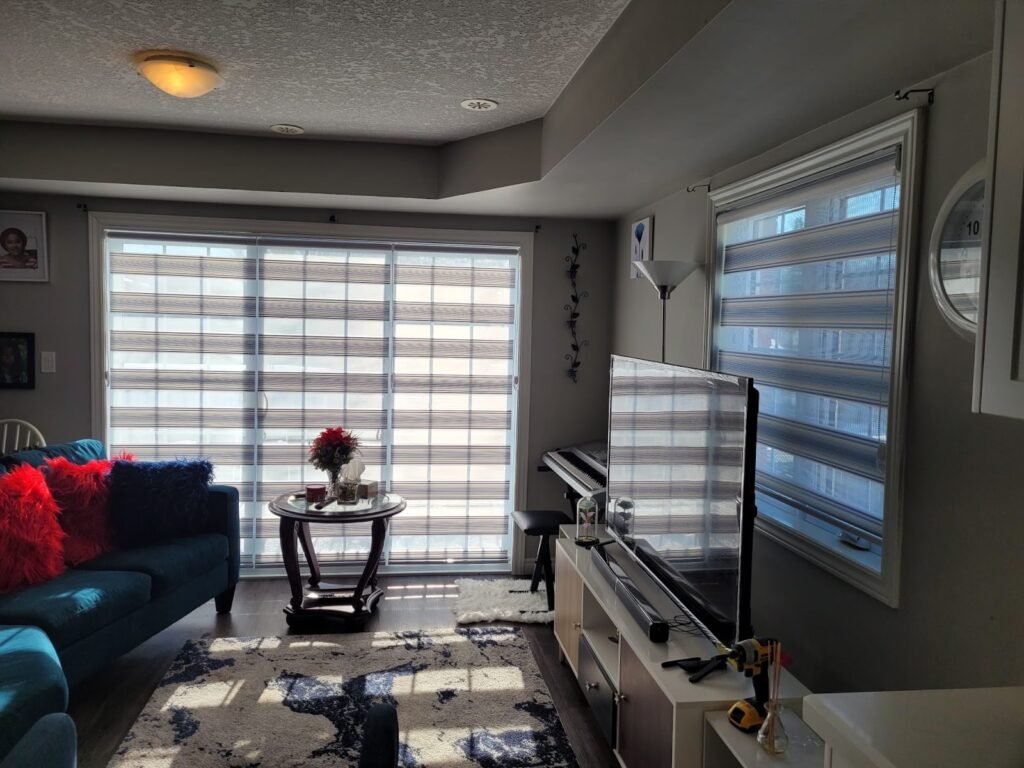 Zebra Blinds vs Vertical Blinds: How to Choose for Every Room
A side-by-side comparison of zebra and vertical blinds, plus room-by-room advice on which one fits your windows, doors and daily routine.
Read the guide
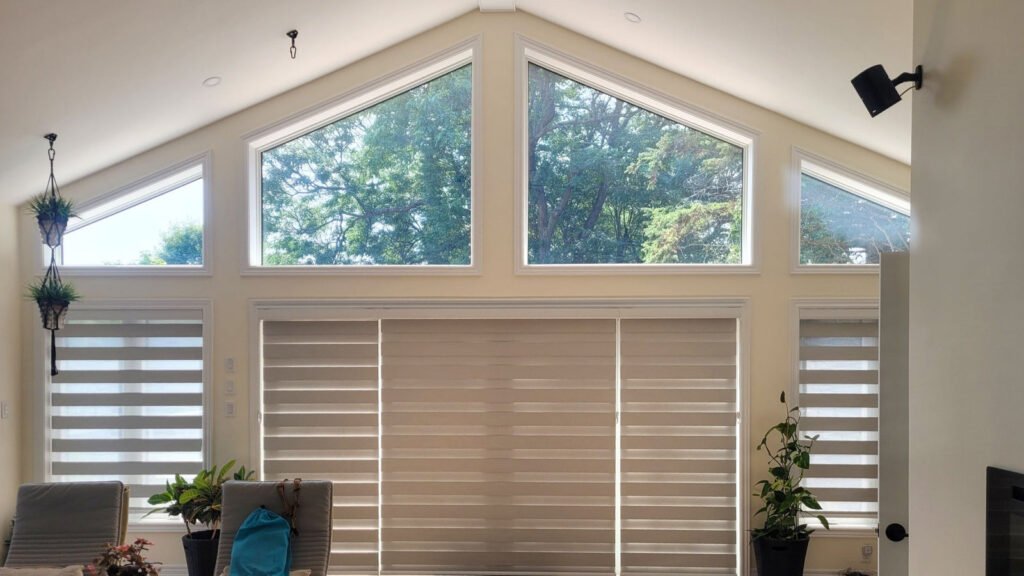 Why Buy Canadian-Made Blinds? 6 Practical Advantages
Fit, lead times, after-sales support and more: what actually changes when your blinds are made locally, plus the questions to ask any blinds company.
Read the guide