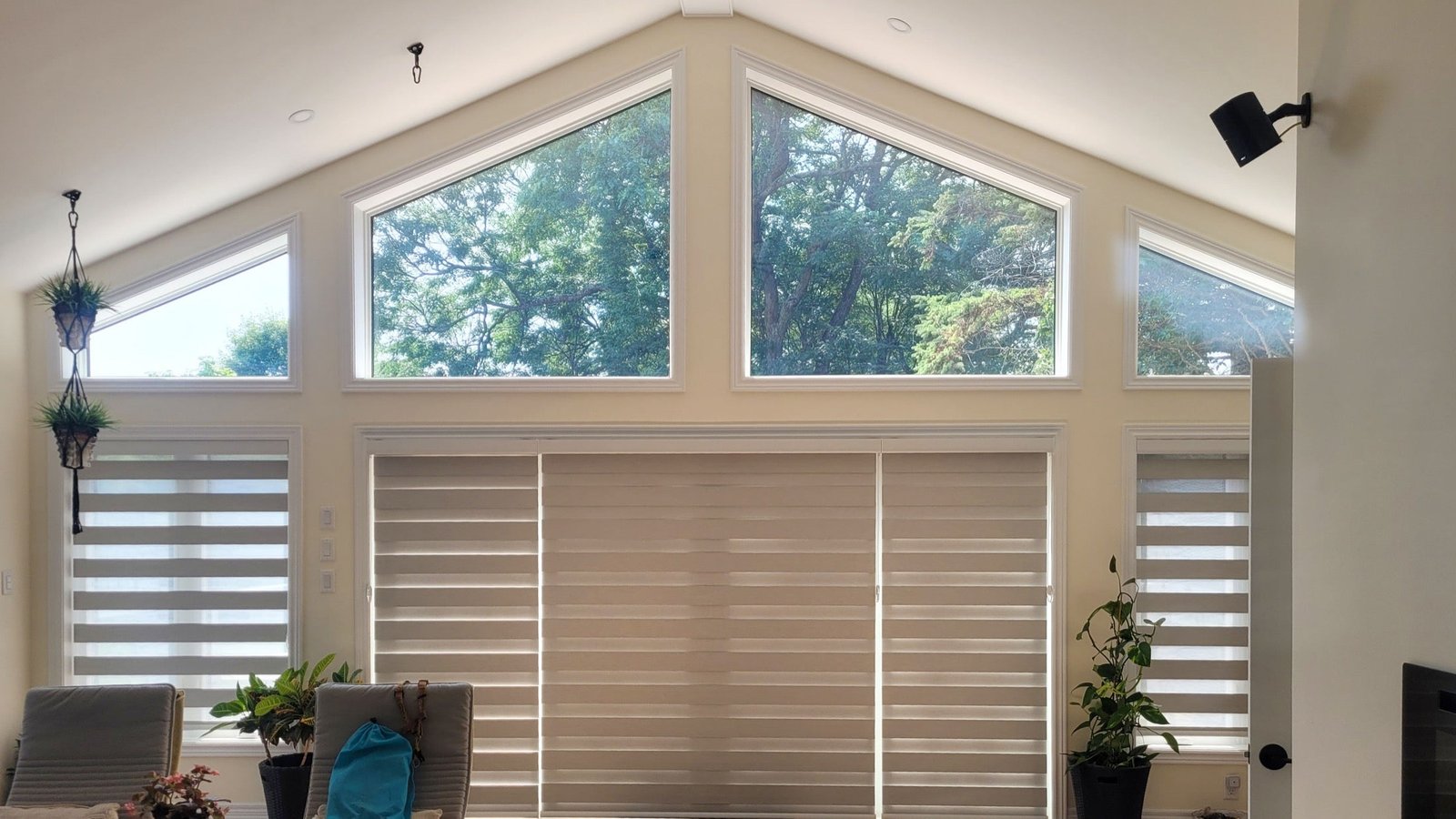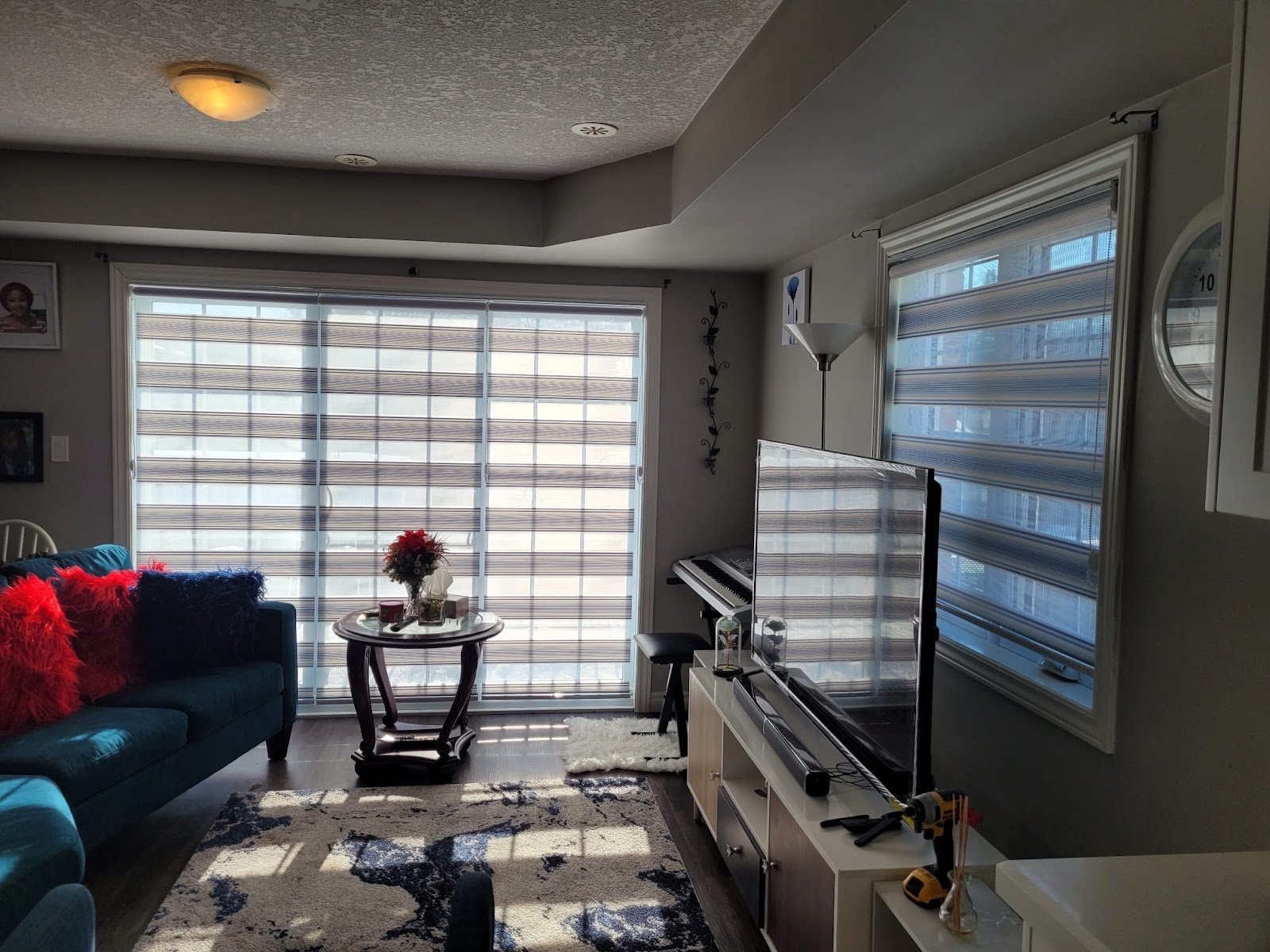
Zebra blinds and vertical blinds are two of the most requested window coverings in Ontario homes, and for good reason: both give you real control over light and privacy without heavy curtains. But they are built for different kinds of windows. Choosing the right one mostly comes down to the shape of the opening, how you use the room and how you want the window to look when the blinds are open.
This guide compares the two side by side, then walks through the rooms where each one works best, so you can decide with confidence before booking a consultation.
Key takeaways
- Zebra blinds suit standard windows best. They roll up out of the way and give fine, easy light control.
- Vertical blinds suit patio doors, sliding doors and very wide windows. The vanes stack to the side so you can walk through.
- Both are available in light-filtering and room-darkening fabrics, and both can be motorized.
- Many homes use both: zebra blinds on the windows and verticals on the patio door.
How zebra blinds work
A zebra blind is a single roller shade made from one continuous loop of fabric with alternating sheer and solid horizontal bands. When the sheer bands line up, filtered daylight comes through and you keep your view. Shift the fabric slightly and the solid bands overlap to close the gaps for privacy. Roll it all the way up and the window is completely clear.
Because everything happens in one smooth fabric panel, zebra blinds look clean and modern. There are no slats to dust individually and no cords hanging across the glass when you choose a cordless or motorized option.
How vertical blinds work
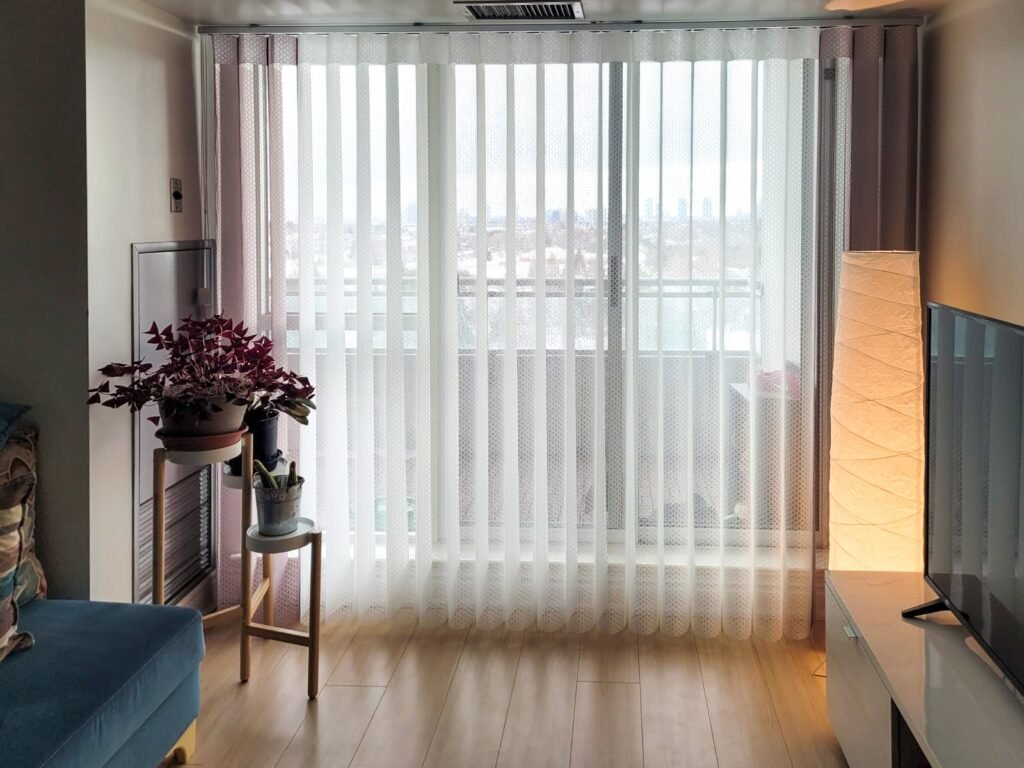
Vertical blinds hang from a headrail as a row of long vanes. The vanes rotate to tilt light in or out, and they draw to one side (or split to both sides) so the full width of the opening is clear. That side-stacking movement is what makes them the natural choice for doors you walk through every day.
Modern vertical blinds look very different from the stiff office versions many people remember. Vertical sheers, for example, wrap each vane in soft sheer fabric, so the blind reads more like a curtain while still giving you tilt control.
Zebra blinds vs vertical blinds at a glance
| Zebra blinds | Vertical blinds | |
|---|---|---|
| Best for | Standard and picture windows, bedrooms, living rooms, kitchens | Patio doors, sliding doors, very wide or floor-to-ceiling windows |
| How it opens | Rolls up into a compact cassette at the top | Vanes rotate and stack to one or both sides |
| Light control | Fine control by aligning or offsetting the bands | Tilt the vanes; draw fully open for a clear view |
| Privacy | Full privacy with the solid bands closed | Full privacy with the vanes closed |
| Access | Best where you do not walk through the opening | Easy to walk through once drawn |
| Look | Clean, modern, minimal | Soft and flowing with sheers, crisp with fabric vanes |
| Motorization | Yes | Yes |
Which one for each room
Living room
For standard or large picture windows, zebra blinds give you daytime glare control without losing the view. If the living room opens onto a patio or balcony through a sliding door, pair zebra blinds on the windows with vertical sheers on the door so the whole room looks coordinated.
Bedrooms
Choose a room-darkening zebra fabric for bedrooms. If you need near-total darkness for shift work or a nursery, look at dedicated blackout shades with side channels, which block the light that leaks around the edges of any rolling shade.
Kitchens and bathrooms
Zebra blinds are easy to wipe down and do not collect grease on individual slats, which makes them a practical pick for kitchens. In bathrooms, they let you open the sheer bands for daylight while keeping the solid bands closed at eye level for privacy.
Patio and sliding doors
This is where vertical blinds win. Because the vanes stack to the side, you can open the door without lifting a heavy shade, and the track handles the full width in one piece. A zebra blind can work on a narrow door, but on a wide slider it has to roll up completely every time you go outside.
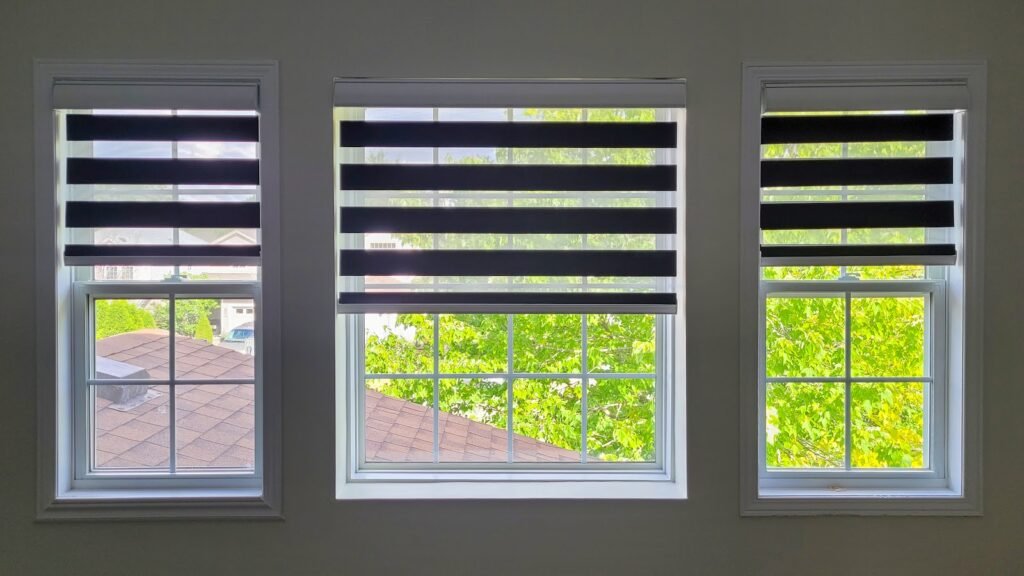
Can you use both in the same home?
Yes, and it is often the best answer. Most homes have a mix of standard windows and at least one large opening. Matching fabric colours across both styles keeps the look consistent, and a good consultant will bring samples of each so you can compare them in your own light.
Frequently asked questions
Are zebra blinds good for sliding doors?
They can work on narrower doors, but on a wide sliding door the shade has to be rolled fully up every time you use it. Vertical blinds or vertical sheers are usually more practical because they stack to the side.
Which gives more privacy, zebra or vertical blinds?
Both give full privacy when closed. Zebra blinds let you keep partial privacy while still getting filtered light by offsetting the bands only slightly.
Can I get blackout zebra or vertical blinds?
Both styles come in room-darkening fabrics. For true blackout in a bedroom, a blackout roller shade with side channels blocks more light around the edges.
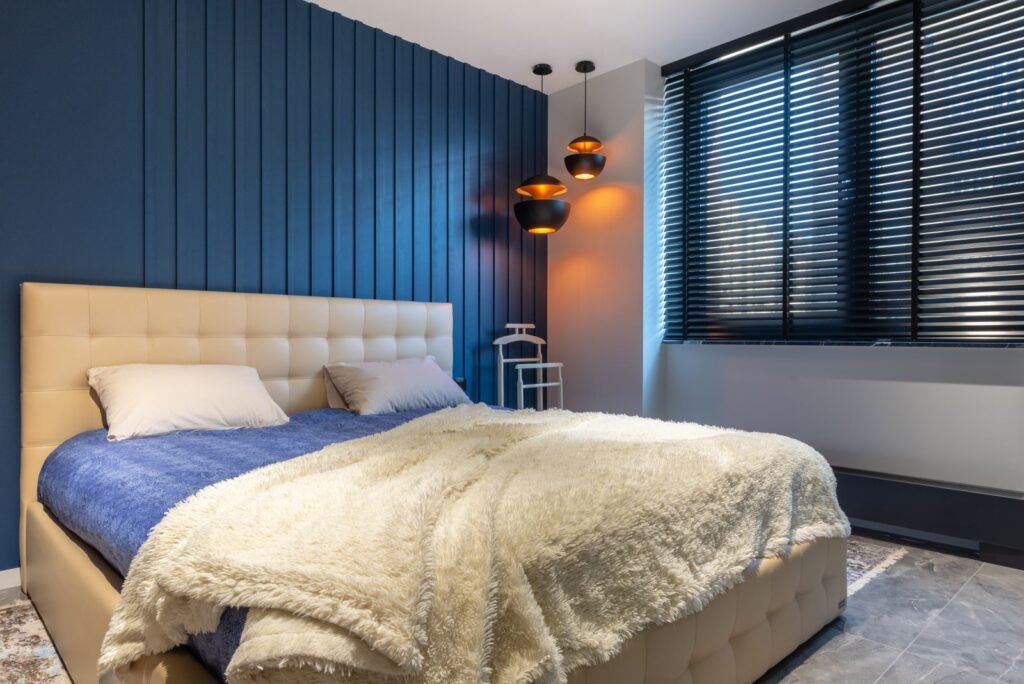 Blackout Blinds for Bedrooms and Nurseries: What Actually Works
Why many blackout shades still let light in, and the fabric, mounting and side-channel choices that make a bedroom or nursery truly dark.
Read the guide
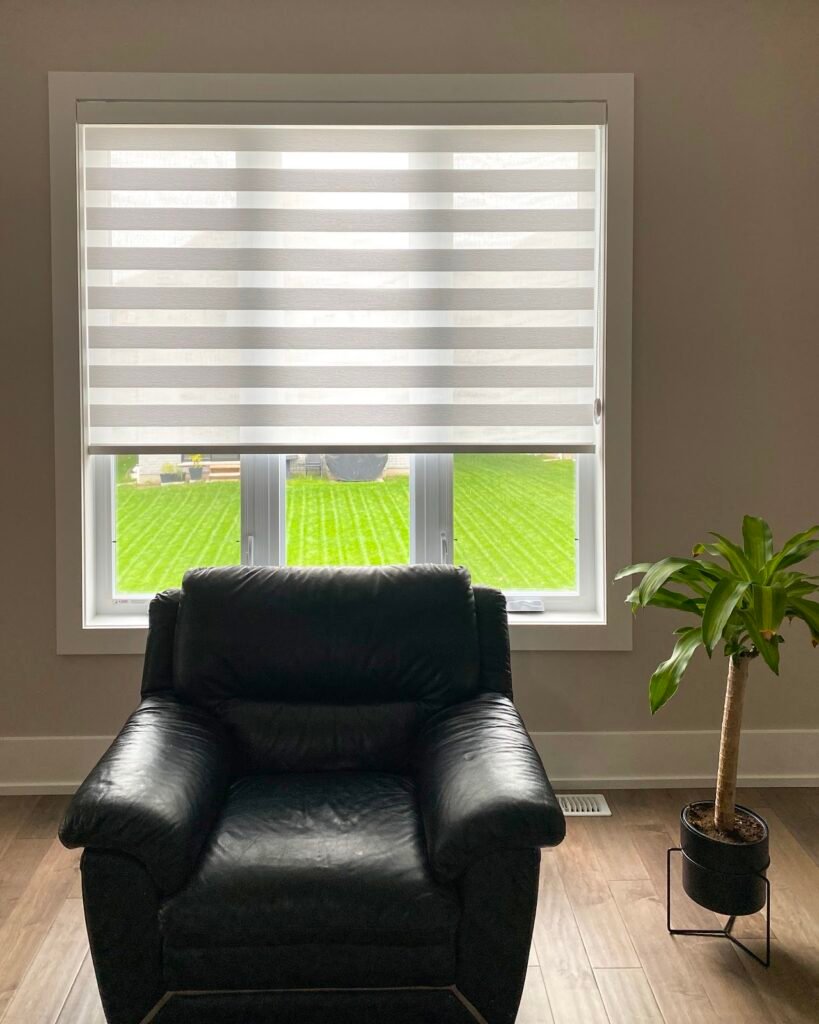 How to Measure Windows for Blinds: Inside vs Outside Mount
A step-by-step guide to measuring windows for custom blinds, with the difference between inside and outside mounts and the mistakes to avoid.
Read the guide
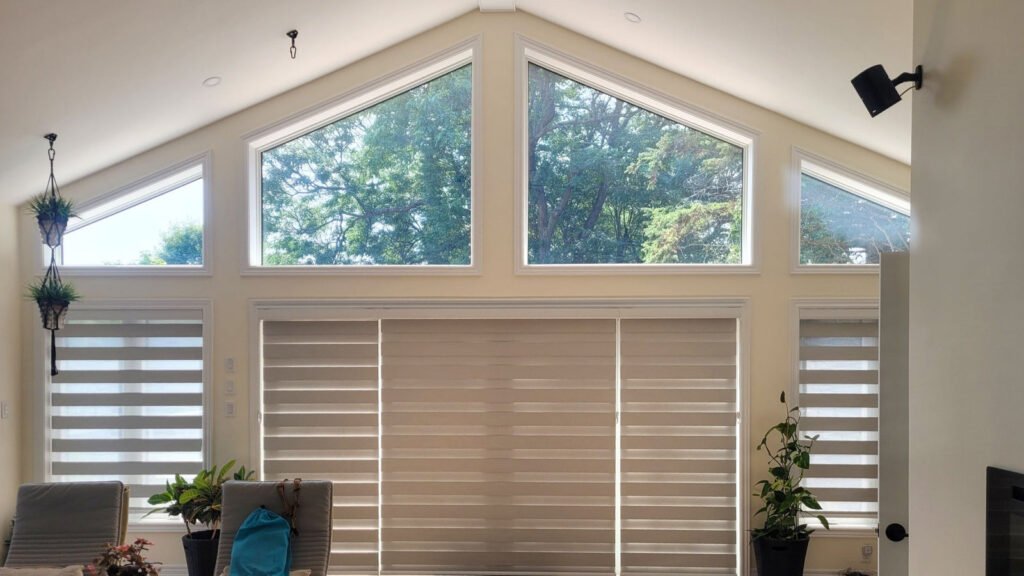 Why Buy Canadian-Made Blinds? 6 Practical Advantages
Fit, lead times, after-sales support and more: what actually changes when your blinds are made locally, plus the questions to ask any blinds company.
Read the guide